
蜘蛛侠1
China-made EVs win a growing number of European consumers, despite EU’s levying unfair tariffs_我的网站

A |
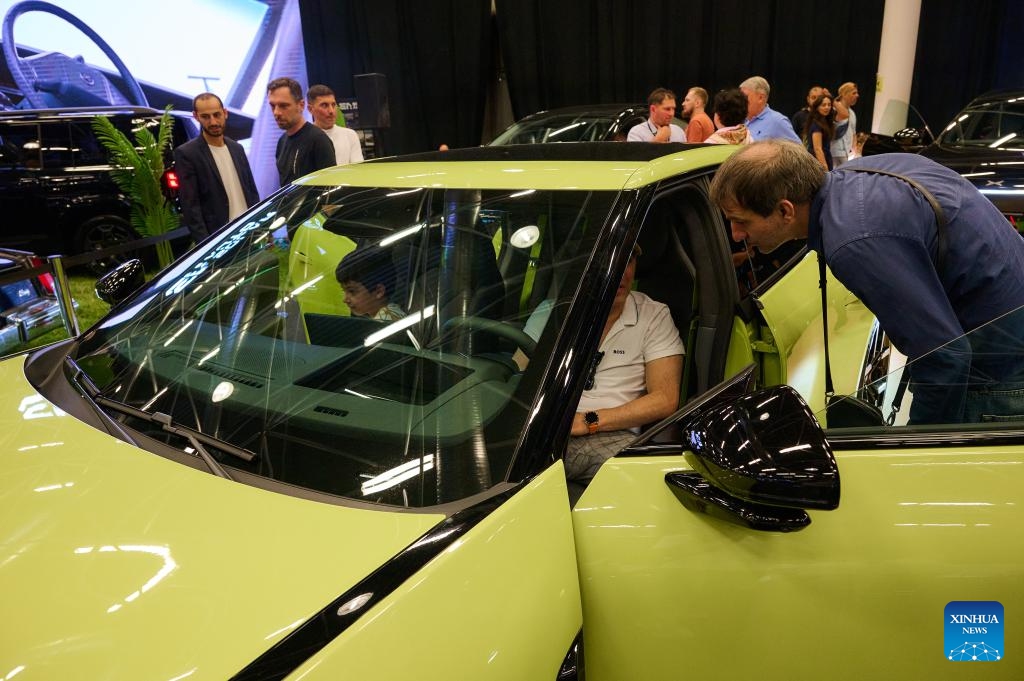
China-made electric vehicles (EVs) accounted for 14.2 percent of European market sales in the first five months of 2026 despite the EU's steep tariffs. The growth showed that trade‑protectionist barriers can only serve as short‑lived obstacles, as consumers' purchasing choice ultimately hinges on product competitiveness and China's EV strengths will support the automakers' long‑term growth, Chinese experts said.
The market share of electric cars sold by Chinese companies rose to 14.2 percent in European market in the first five months of this year, according to Schmidt Automotive Research. The 171,800 EVs sold there represented an increase in market share of five percentage points from one year earlier, the Guardian reported on Sunday.
The increase in European sales comes despite EU tariffs of up to 35.3 percent for EVs made by some Chinese manufacturers, on top of the standard 10-percent import duty. The UK is the largest European market for Chinese cars because London has declined to follow the EU's lead in imposing more levies. The UK accounted for a quarter of Chinese EV sales in Europe, according to the report.
Cui Dongshu, secretary-general of the China Passenger Car Association, told the Global Times on Monday that the surge showed trade protectionist policies have failed to contain Chinese automakers' overseas expansion.
Chinese EVs enjoy "a generational edge" over Europe's legacy carmakers. Their overall product strength remains the primary reason behind their popularity among European buyers, Cui said.
Meanwhile, fluctuating global oil prices have pushed up driving costs throughout Europe, fueling demand for affordable electric vehicles, a need well‑met by the affordable Chinese‑made models. Meanwhile, the gradual return of European electric‑vehicle purchase subsidies has lowered purchase barriers and lifted total EV sales, which has in turn worked to the advantage of Chinese exporters, Cui Dongshu said.
Chinese brands expanded their market share in Europe in the first half of 2026 driven by local subsidies and higher oil prices, Fitch Ratings said in a report sent to the Global Times.
The combined market share of leading Chinese brands in the EU, European Free Trade Association and UK rose to 11 percent in the first half of this year, up from 7 percent in the first half of 2025. The largest Chinese players, Geely Group (including Volvo Car) and SAIC Motor, expanded steadily despite the tariffs. The main drivers of market share gains were BYD, Chery and Leap Motor, according to Fitch Ratings.
Cui Dongshu noted that China's EV edge comes from its full‑fledged industrial ecosystem.
Officials from China's Ministry of Commerce told a press conference on July 28 that China boasts a complete, high‑efficiency EV industrial chain covering raw materials, auto parts, finished cars and production equipment, with industry clusters enabling rapid component supplies. China's huge market, the world's largest, has fueled 11 consecutive years of EV sales.
"Protectionism can only put up short‑term entry barriers. It cannot erase the solid strengths of Chinese EVs or stop Chinese brands from establishing a lasting foothold in Europe," Cui Dongshu said.
Yet, geopolitical risks remain as the EU reportedly considers expanding tariffs to restrict Chinese plug-in hybrid EVs.
German media Handelsblatt reported on June 19 that the EU is drawing up new measures to shield its single market more tightly against Chinese imports in the near future, citing senior EU officials and industry insiders. Specifically, the plan could contain countervailing duties to be levied on Chinese‑made plug‑in hybrids.
The rising market share of Chinese‑brand EVs amid EU tariffs has demonstrated that trade barriers cannot distort market choices. If the EU carries out its planned countervailing duties on Chinese plug‑in hybrids, the measure will yield only limited results, Cui Hongjian, a professor at the Academy of Regional and Global Governance at Beijing Foreign Studies University, told the Global Times on Monday.
Europe's problems stem from weak competitiveness and flawed energy policies. The EU ought to cast aside its confrontational mindset, remove unfair restrictions and pursue consultations and cooperation with China. Shifting industrial‑sector conflicts outward cannot remedy the weaknesses of its EV sector and will only damage the EU's reputation for destroying free trade, Cui Hongjian said.
。当天境外输入病例256例,确诊病例中新增17例死亡病例。台防疫指挥中心发言人庄人祥称,13日新增病例数和上周二相比增加28%。

B | 联合新闻网注意到,不少县市的确诊数暴增,其中嘉义县确诊病例增幅高达129%。疫情如此严峻,蔡英文当局却在轻视中医。“卫生福利部”日前宣布清冠一号公费对象限缩。清冠一号是2020年疫情暴发之初岛内中医所研发的,希望用中药医治确诊者,2020年4月清冠一号的配方完成,5月技术转移给岛内8家中药行,10月清冠一号开始在岛外售卖。国民党“立委”曾铭宗13日在记者会上称,“卫福部”下属的中医药研究所研究结果显示,接受清冠一号治疗后,轻中症确诊者均未转为重症,重症患者死亡率更显著降低,但“卫福部”却自打嘴巴,限缩清冠一号的公费条件。他怒批民进党当局打压岛内中医药产业开发的药物,而放任高端疫苗为所欲为,还对内线交易不管不顾。

C | 媒体人“逆风的乌鸦”称,2021年3月蔡英文公开夸奖清冠一号“帮台湾走出去”,可是讽刺的是,当清冠一号在岛外售卖的时候,它在台湾却无法售卖。“卫福部”没给它药证,也没给它EUA(紧急使用许可证),直到去年5月才终于发给它EUA。台北市中医师公会长照委员会主委褚衍强称,5月“卫福部”共购买辉瑞口服药72万剂和莫纳皮拉韦10.5万剂,每剂费用折合新台币约2万元,共计花费高达165亿元,但购买清冠一号仅9亿多元新台币,落差极大。他质问道,在经费有上限的状况下,“为何舍弃便宜有疗效的方式,而采用比较昂贵的治疗方式?”台“中华人权协会”13日还说,从近两年间蔡当局在防疫上的种种弊端以及自吹自擂的政治操作,显示其根本没有把民众的生命与健康放在最优先的位置考虑。无论是采购疫苗、快筛剂、口罩还是抗病毒药物,蔡当局只对高端特别照顾。
Current article:http://dn7r.yofateeikengyeche.cfd/zgzo/20260826/77260.html
Published on:19:34:12
你可能也喜欢这些
 'Looking for Champion': Republican Explains Likely Reason Why Ilhan Omar Was Booed at Concert
 横から完全にあふれだした“J”砲に釘付け! 現役アイドル・Benjamin パクチー「FLASH」大胆に乱れる
 隆多评老詹选择加盟76人
 Exclusive: Raashii Khanna Shares MAJOR Update on Farzi 2
 UAW chief to say if auto strikes will grow from 34,000 workers now on picket lines
 四川宜宾市长宁县发生4.7级地震,震源深度5公里
 五层楼高树倒压毁货车 车顶凹陷玻璃碎
 文森特休赛期苦练寻新合同 当年湖人开3年3300万