正能量
对话重庆直播卖烧烤为先心病儿筹款的单身母亲:暂拒后续捐助,政府已在协助_我的网站

一 |
Germany's industrial woes have increasingly become a hot topic of discussion. The latest Engineer Monitor report from professional association Verein Deutscher Ingenieure and the German Economic Institute offers a new look at the issue.
The report showed that there were 58,392 unemployed individuals in the engineering and information technology (IT) professions in the fourth quarter of 2025, the highest level since the survey began in 2011.
Compared with the previous year, the number of unemployed increased by 16.7 percent, according to German media reports on Sunday.
These figures lay bare the challenges confronting the country's manufacturing sector. The reasons for the industrial woes are multiple. The soaring energy costs caused by geopolitical conflicts, the decline in exports caused by rising protectionism and low external demand, and the structural pain caused by industrial chain restructuring are all squeezing the space of German manufacturing.
Manufacturing is the backbone of Germany's economy, and engineers and IT specialists constitute the core force that sustains this pillar. For decades, the country's reputation for "Made in Germany" excellence was built on the expertise of these skilled professionals. Regardless of the macroeconomic ups and downs, preserving the stability and continuity of its industrial talent pool represents a strategic bottom line for Germany.
Should large numbers of highly skilled technical professionals leave the industry or sit idle, industrial research and development (R&D) and production cycles will be disrupted. Over the longer term, such a waste of human capital will erode Germany's industrial innovation capacity and, ultimately, undermine the foundations of its global competitiveness.
In this context, the urgent task for Germany is to create sufficient quality positions for its technical talent. Should it fail to do so in the short term, then Germany needs to embrace a more open‑minded development approach. Shoring up its manufacturing base cannot be achieved solely through protecting domestic companies; it also requires a significant expansion of effective investment to create enough high‑quality jobs that can attract and retain skilled talent.
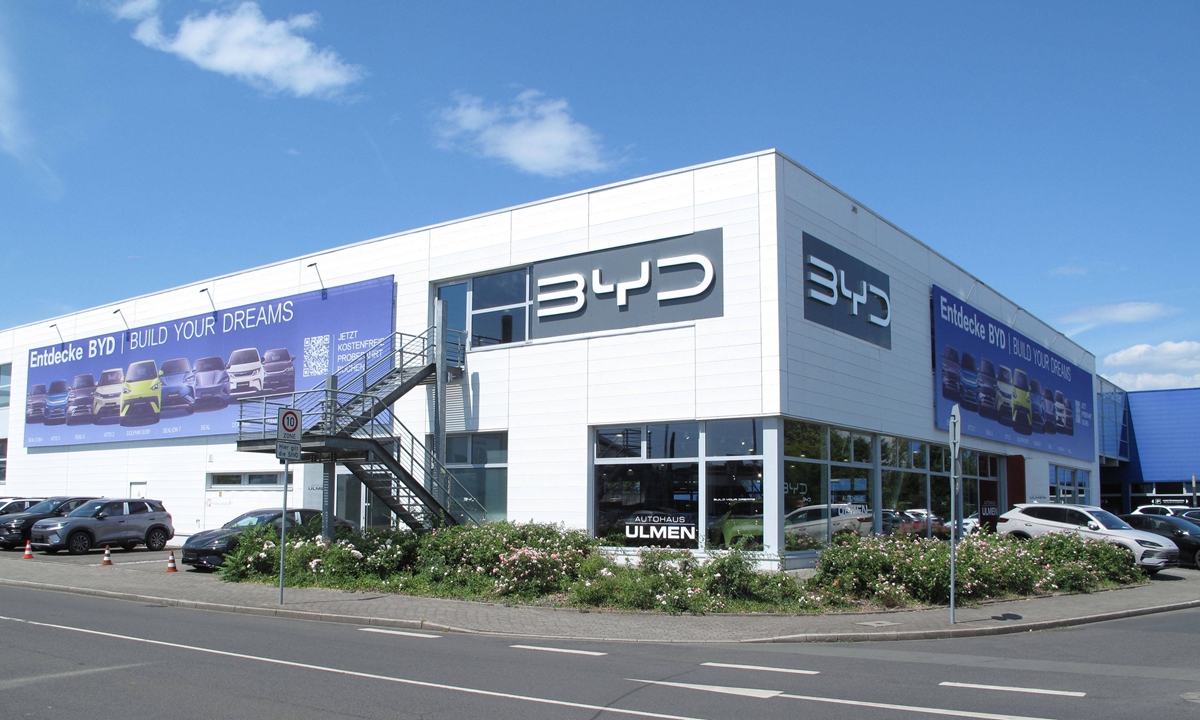
This is exactly where China‑Germany cooperation could deliver tangible results. According to the FDI Report 2025 published by Germany Trade & Invest (GTAI), the total number of foreign investment projects in Germany fell 9.3 percent overall to 1,564 in 2025. Nonetheless, Chinese companies became the largest source of foreign investment projects in Germany in 2025, overtaking the US for the first time since 2017.
Chinese companies launched 228 investment projects in Germany in 2025, up 14.6 percent year-on-year. More than one in five Chinese investment projects involved production and R&D activities, above the overall average for foreign investment projects in Germany. This is a sign that Chinese firms are deepening their integration into the local industrial base, according to GTAI.
Observers noted the trend, pointing out that China is becoming an important force in driving German re‑industrialization. In industries where Germany urgently needs to rebuild its competitive edge, such as electric vehicles, batteries, energy technology, digital manufacturing, and automation, China is emerging as an increasingly significant complementary partner. In these critical areas that will determine industrial competitiveness in the coming decades, the relationship between China and Germany is not merely one of rivalry; there are clear and substantial complementarities. Germany still boasts world‑leading engineering expertise, precision manufacturing capabilities, and a strategic location at the heart of the European market.
China has complete and highly integrated supply chains for raw materials and intermediate goods and large capacity for increasing production. When Chinese automakers set up R&D centers in Germany, or when Chinese tech firms collaborate with German factories to build smart production lines, the beneficiaries are not only the Chinese companies but also the German engineers who would otherwise face redundancy.
Cross‑border investment cannot flourish without a sound policy environment. Chinese companies are apparently willing to develop in Germany, but it can only happen on the premise that the German side provides a fair, reasonable and predictable business environment, reduces non-market interference in commercial activities, and allows capital to operate in accordance with market rules.
If the two countries are able to reach a deeper level of cooperation in investment, many of Germany's trade‑related concerns may well find more pragmatic solutions. The deep integration of industrial value chains would facilitate two‑way trade, creating renewed momentum for German exports of machinery, vehicles, chemicals, and other competitive products to China.
。 近日,带着两个孩子一边卖烧烤一边直播的重庆单身母亲林静受到全国各地的网友关注,并在一天时间里收到近30万元的爱心捐款。十年前,林静的大儿子淼淼(化名)出生。不幸的是,淼淼满月时被诊断患有先天性心脏病和“镜像”心脏(即心脏长在身体右侧)。手术时,淼淼又出现了严重的并发症——大脑血管堵塞引发严重癫痫。在爱心人士的帮助下,淼淼才艰难度过危机。此后,林静通过做家政、开塔吊、卖烧烤挣钱。直播火起来后,林静又加入到直播大军,希望能借着风口“能多挣一点是一点”。林静又是幸运的,她带着淼淼和小女儿直播卖烧烤的故事得到网友关注。1月19日,林静告诉澎湃新闻(www.thepaper.cn),她已经把网友捐助的渠道关闭了,暂时无需其他捐款。

二 | 淼淼春林静的儿子淼淼节后的手术,当地政府也在帮助她对接协调。她感谢网友的关注,也希望能尽快回归平静的生活。以下是澎湃新闻和林静的对话:谈大儿子病情:期待手术效果,希望让他尽早回到学校澎湃新闻:目前淼淼的身体状况如何?林静:2024年,我带着淼淼去了北京,找到中国医学科学院阜外医院的专家给孩子看病,7月份的时候在阜外医院做了心脏手术。

三 | 然后11月份去复查的,复查的结果挺好的,我们前段时间也给医院那边说了,年后去手术,但是住院单还没有开上,因为时间隔得太久了,还是要一个月以内。但是现在这两天,政府的工作人员跟我说,他们帮我安排这一系列的事情,帮我们对接,不需要我们再操心这个事情了。

四 | 澎湃新闻:手术费凑齐了吗?林静:暂时够了,现在我们不需要额外的帮助,刚好趁着你们这个新闻,我也想表达一下感谢,感谢给我们捐了善款的网友,大家实在是盛情难却。我把支付宝、电话号码(等联系方式)都关了,大家还是很热情的想帮助我,我们现在不接受捐助了,大家给我点一个赞,给我一个关注就好了。澎湃新闻:淼淼对自己的病情有怎样的认知,他的心理状态如何?林静:他可能对这个病不是那么了解,但是他的病情他都知道,因为他的性格是比较阳光的,所以每次都是很正面地在回应这个事情。

五 | 澎湃新闻:淼淼在上学吗?林静:原本他是在上学,因为上一次做了手术,他的身体状态不太好,身体机能啥的跟不上,所以说就休学了。我想的是,因为他春节后要做手术,做完了之后看他的身体情况。我还是想让他回归到学校去。

六 | 因为在学校他可以和同龄的孩子有交流,会更有童趣。在家里面其实他失去了很多很多该有的乐趣。澎湃新闻:照顾淼淼,主要面临着哪些特殊的困难和挑战?林静:刚开始的时候肯定困难,我一个人带两个孩子,还要摆摊去挣钱,就有点心有余力不足,但现在好多了。澎湃新闻:你带着两个孩子摆摊时,两个孩子在干点啥?林静:他们就陪着我,有时候会帮忙。淼淼的话,他会在我摆摊的时候帮忙叫卖什么的。有时候他会摆一个小摊,他卖不到钱,他就着急,没有耐心。要么就在旁边,他自己和妹妹一起玩儿。

七 | 谈直播走红:希望自己也能帮助更多的人澎湃新闻:你在网上是怎么火起来的?林静:我2019年的时候就开始发一些视频,记录日常生活中开心的、不开心的,主要是给自己加油鼓气。后来,有个两百多万粉丝的博主关注到我了,了解到我的故事之后就说要给我拍一期视频,当时我其实对自媒体不太了解,我觉得拍一期就拍一期嘛,结果没想到播放量、点赞量挺高的。虽然没有现在这么火,但我也挺意外。

八 | 当时大家很多人给我捐款,我都没有接收。我说这么大一波流量来了,我想自己可以靠这个网络和流量,看看自己能不能长期带货或者是干一些其他的营生,自己给自己挣钱,给儿子做完手术。但是后面那个流量来得快,去得也快,差不多半个月左右的时候,就没啥流量了。所以说那一次后面再有人给我捐助的时候,大家都特别急,网友他们特别急,他们说为啥你不接受?儿子那么着急要做手术。所以说最后我考虑了很久之后才接受大家的第一笔捐赠就是从那个时候开始的。后面因为那个视频点赞量挺高的,所以也有很多大大小小的博主陆陆续续来拍一拍我,拍摄的时候流量还行,但是发完之后差不多半个月左右,就又沉寂了。澎湃新闻:你在网上有没有受到质疑,说你炒作之类的,你怎么看?林静:这个很正常,我觉得网络是一把双刃剑,其实有很多现实中知道我的,或者是从一开始就从我几千几百个粉丝就关注到我现在的粉丝,他们都知道我这一路是怎么走过来的,他们都在帮忙,为我澄清、为我发声,我真的很感动。看到负面评价,要说心里面没有波澜那是不可能的。我之前在工地上面开塔吊的时候,也被网暴过一次,就是我发布了一个很正常的生活日常,我不知道他们的关注点,他们就关注到其他地方了,导致我被网暴,郁闷了一两个月。所以说现在对网络这个评价的话,我会更平和一点,就是我觉得不会对我的心理造成很大的影响。因为我也知道网络这个东西,它本身接触的就是全国各个形形色色的人,什么人都有的。澎湃新闻:这两天还在摆摊卖烧烤吗?林静:今天开始没摆了,等等稍微人流量缓一点。

九 | 我现在就是在璧山(区)一个镇上摆摊,昨天还在摆摊,好多人来买。我说咋这么多人,全是刷到视频过来的。我要是在主城那边的话,估计可能人会更多,主要是我女儿年龄太小了,有时候顾不过来。澎湃新闻:未来有什么打算?林静:这次的事情(指受到关注)给我启发挺大的。我本来是属于“弱者”,像我们这种家有重病患者的家庭,得到社会的关注,得到“强者”的帮助后,我的状况一下子就改变了。我也想慢慢让自己变好,去帮助到那些我之前想去帮助而帮助不到的人。

十 | 澎湃新闻记者 王鑫 实习生 王潇笛(本文来自澎湃新闻,更多原创资讯请下载“澎湃新闻”APP)。
Current article:http://dn7r.yofateeikengyeche.cfd/news/20260826_6333.html
Published on:19:11:09